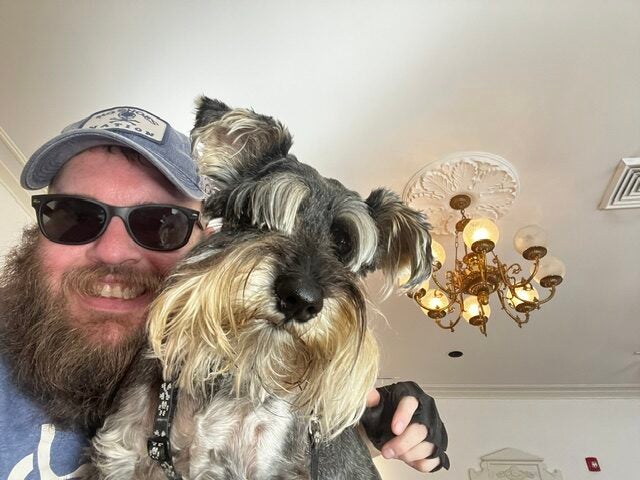
Navy Seaman Brian Adam Wickensimer was raised on a hog farm in rural Ohio, where early mornings, heavy labor, and long days under open sky forged the discipline that would define him. Between feeding livestock before school and working the land alongside family, he found his footing in the rhythms of country life—hunting, fishing, racing, showing animals, and staying active in his church community. In high school, he threw himself into vocational agriculture and FFA competition. Under the guidance of dedicated instructors, he became Ohio’s top poultry judge and placed seventh in the nation.
On September 11, 2001, Wickensimer watched the attacks unfold from his vo-ag classroom. The moment crystallized what he already felt: a duty to serve. He entered the Navy through the Delayed Entry Program, graduated high school in 2002, and shipped out in 2003.
Basic training proceeded as expected until a knee injury during the final evolution. A subsequent fall during rehabilitation revealed far more serious damage—damage that would ultimately result in paralysis and a constellation of complex medical challenges. In 2004, at just twenty years old, Wickensimer was medically retired from the United States Navy.
The years that followed tested him in ways combat never would. Pain, addiction, and the unrelenting demands of adapting to life with a spinal cord injury pushed him to his limits. But Wickensimer is not a man who stays down. He clawed his way back—overcame addiction, rebuilt his daily life, and found stability on his own terms. Today, with the support of the people closest to him, he continues to navigate the complexities of his disabilities, including the lasting effects of PTSD.
Wickensimer channeled his experiences into service. He became a certified peer support recovery specialist, turning the hardest chapters of his own life into tools for helping others find their way back. He is a steady advocate for veterans and people with disabilities, driven by the belief that no one should have to fight alone for the access and dignity they deserve. As ordained clergy, he provides spiritual counsel to incarcerated individuals serving life sentences—men the world has largely written off, but whom Wickensimer has not. He also helps incarcerated veterans navigate the system to claim the benefits they earned through their service, ensuring that a prison wall does not erase what they gave to their country.
To manage his PTSD, Wickensimer took to the road—and never stopped. He drives roughly 55,000 miles a year in his wheelchair-accessible van. But the miles are no longer just for him. On any given week, he can be found transporting unhoused individuals to critical appointments, driving disabled community members to work or medical visits, and running errands for people who have nowhere else to turn. For Wickensimer, the open road is not just therapy—it is purpose.
Family remains at the center of his life. Wickensimer lives with his family. His primary caregiver, along with his mother, his brother, and others close to him, supports his day-to-day care, while his extended family provides steady encouragement. With a custom smart home from Tunnel to Towers, Wickensimer has gained a foundation of accessibility and independence that matches the life he has already built—and a base from which to keep serving the community that helped carry him through.
Navy Seaman Brian Adam Wickensimer often reflects on how the cost of survival reshapes a person—especially when access and independence are no longer guaranteed. His life is proof that they can be reclaimed, and that reclaiming them is only the beginning.
The Tunnel to Towers Foundation has provided Navy Seaman Brian Adam Wickensimer with a mortgage-free smart home through the Smart Home Program.