How the Tunnel to Towers Foundation’s Smart Home Program Changes and Saves Lives By Tom Sileo
United States Marine Corps Sgt. Ben Tomlinson was just 21 years old when he was first injured while serving in Afghanistan. Two years later, he was wounded again—and paralyzed.
“I don’t think you ever really come to grips with it, man,” Ben, who was shot in the neck during his second combat deployment, told the Tunnel to Towers Foundation. “It’s frustrating, you know, because I was a very independent, capable person—I kind of prided myself on that.”
Ben had planned to go to college after his Marine Corps service and use the money he saved in the military to buy his first house. Instead, at age 23, Ben was suddenly confined to a wheelchair.
“I was living with my parents and we had done what we could to make adjustments,” the elite Reconnaissance Marine said. “But it was not really suitable for me getting around much at all.”
At the time, the young paralyzed hero’s path forward looked unimaginably difficult. That all changed in 2012, when Ben received an unexpected phone call. On the other end of the line was Tunnel to Towers Chairman and CEO Frank Siller.
“He told me about building me a house,” Ben said. “I was like, ‘wow, that’d be great. How much is it going to cost?’ He’s like, ‘no, we want to do it. We want to pay for it.’”
Ben couldn’t help but laugh while recalling his initial reaction. He thought the phone call was a scam until Frank began to explain the Smart Home Program, which was still in its early stages back then. Frank told Ben that through the new program, the Foundation would renovate, modify or – in Ben’s case – build a fully accessible, mortgage-free house.
“I said, ‘well, that sounds amazing if this is actually going to happen,’” Ben said.
Suddenly, there was hope.
‘Some Days It’s Overwhelming’
Heather Betz was living her childhood dream while working as a K9 Deputy for the Jasper County Sheriff’s Office in South Carolina.
“I enjoyed being a police officer. I just … I loved it,” Heather said. “I loved working with the community.”
Heather was just eight minutes from the end of her Thanksgiving night 2018 shift when she responded to a drug-fueled domestic dispute. She and her police dog arrived to “a war scene” as they faced a barrage of bullets from an assailant who was barricaded in a hallway with his wife. Clearly in grave danger, Heather and her fellow officers started returning fire.
“The first round hit him in the shoulder. My second round missed … and then he ended up shooting me,” Heather said about the harrowing gun battle. “After he shot me, I fired one more time and hit him in the chest, and that’s basically what ended his life.”
While her actions were heroic, the consequences for Heather were catastrophic. Bullet fragments entered her eye and brain, which eventually made it impossible to continue her beloved police work.
“I lost my career. I lost my normality,” she said. “You know, it’s like I’m blind now. I have traumatic brain injury.
“Since I’ve been shot, I’ve had four mini strokes now,” Heather continued. “It’s constant migraines and constant eye pressure. I’ve had to have a couple sinus surgeries because of the shooting.”
Sometimes, the pain would just be too much.
“It’s just so hard … a mental struggle, a physical struggle,” she said. “Just to try to push through … some days it’s overwhelming.”
In 2025, Heather was crying as she walked into her darkened home, which had to be kept that way due to light sensitivity from her eye injury. Immediately concerned, her husband – US Marine Corps veteran Chuck Betz – asked what was wrong.
When Heather told Chuck that the Tunnel to Towers Foundation was going to pay off their mortgage and renovate their house as part of its Smart Home Program, Chuck – who was in law enforcement like his wife – had a reaction similar to Ben Tomlinson’s.
“This just doesn’t sound right,” Heather remembers her husband saying. “It’s too good to be true.”
After speaking with someone from the foundation, Chuck realized that the phone call his wife had received was not only legitimate, but life-altering.
“Oh my God,” Heather quoted Chuck as saying. “This is real.”
‘I Can’t Even Get Out of Bed’
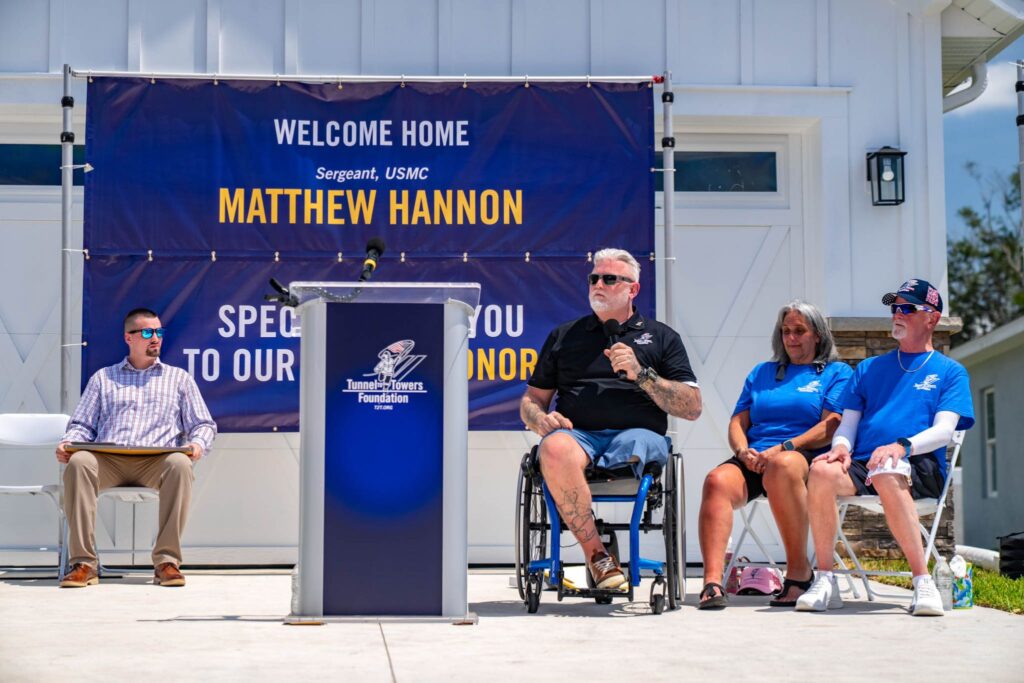
Sergeant Matthew Hannon was serving with the U.S. Marine Corps in Okinawa, Japan, on a date that no American would ever forget: September 11, 2001. He knew it would change his life.
“I would say for all of us … we knew we were definitely going somewhere and doing something … we just didn’t know who or where,” Matthew said. “We knew the why.”
Like so many valiant service members, Matthew’s resolve to fight terrorism and evil only strengthened after witnessing the horrors of the 9/11 attacks, even from afar.
“I can say at that time, there was definitely – and I’m sure for a lot of New Yorkers and most importantly citizens of the United States – a desire for vengeance,” Matthew explained.
For the next five years, Matthew served and fought across the Middle East. His deployments to Iraq came during many of the most intense periods of the war, including in perilous places like Fallujah and Ramadi. It was during the initial 2003 invasion, however, when Matt thinks he might have suffered his most serious wounds.
“Saddam (Hussein) had been known to use mustard gas, sarin, the whole nine yards,” Matthew said. “And being in the Reconnaissance element, we went down into these holes … and we’re wiping those barrels with our bare hands.”
Matthew and his fellow elite Marines were never told what was in those barrels, but upon receiving news from doctors that he had a large tumor in his head that had been growing since 2004, he quickly connected the dots. While Matthew made it out of multiple combat zones and retired from the Marine Corps in 2006, war’s terrible scars would always be with him.
“They shaved my skull up,” said Matthew, while adding that he had many additional surgeries and complications. “They shaved my temporal bone, you know, that bone in the back of your head. They shaved that completely away and then they took my quadricep muscle and put that up there.”
Despite his battle-hardened toughness and firm faith, Matthew finally reached his breaking point after his left leg was amputated.
“I just didn’t know what God’s will was,” he said. “I can’t even get out of bed. I’m struggling.”
During a 2023 visit to honor his fallen brothers in arms at Arlington National Cemetery, God gave Matthew a miracle. It was a phone call from Tunnel to Towers saying that he would be receiving a mortgage-free smart home in the foundation’s inaugural Let Us Do Good Village.
“I was like, ‘I just visited my brothers,’” said Matthew, who was overwhelmed with emotion. “I needed a minute.”
Only minutes before the phone call, in fact, Matthew – distraught by the loss of his friends and his own medical condition – had been contemplating leaving this world. Now, he had a completely different outlook.
“I could have laid on that grass and died that day,” he said. “And I ended up getting a call from the foundation.”
‘They’re Honestly Like My Extended Family’
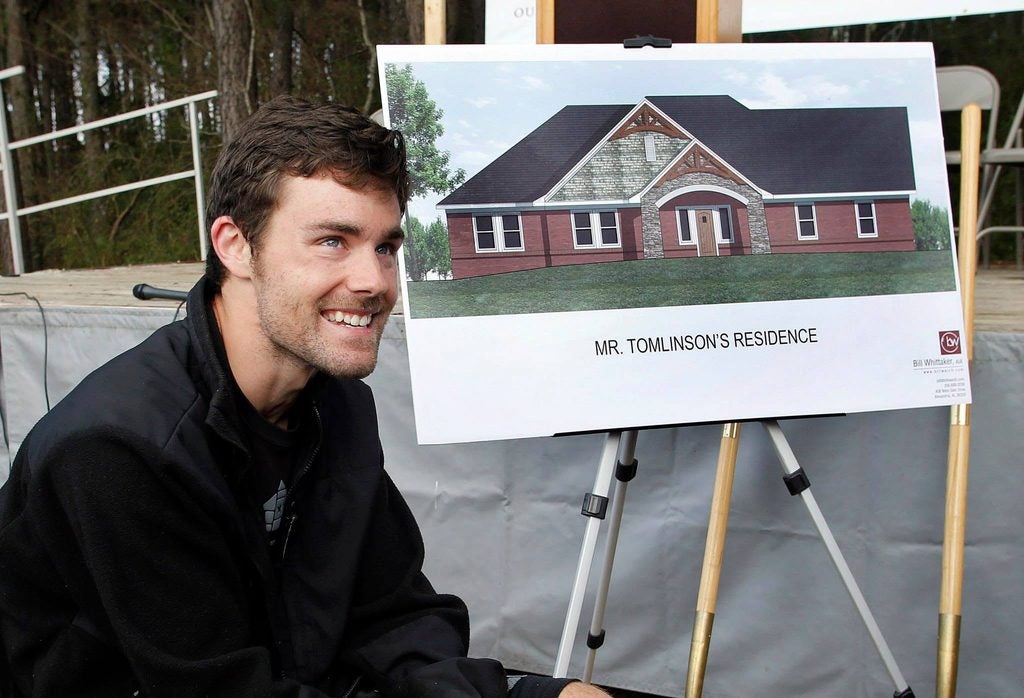
Needless to say, Ben Tomlinson’s phone call from Frank Siller was not a scam. On November 11, 2014 – Veterans Day – Frank handed Ben the keys to his brand new mortgage-free smart home in Jacksonville, Alabama.
“Is this not a miracle? Is this not what we are supposed to do?” Frank said during that day’s emotional Building for America’s Bravest Smart Home Ceremony. “When somebody in our family needs something, we must, and who more important than the men and women who protect us and give us the life that we have?”
After nearly a dozen years, Ben indeed still feels that close-knit bond to the Tunnel to Towers Foundation that Frank referenced.
“They’re honestly like my extended family now,” Ben said. “What they’ve done for veterans and first responders is second to none.”
To say that Ben’s mortgage-free smart home changed the course of his life over the past 12 years would be an understatement.
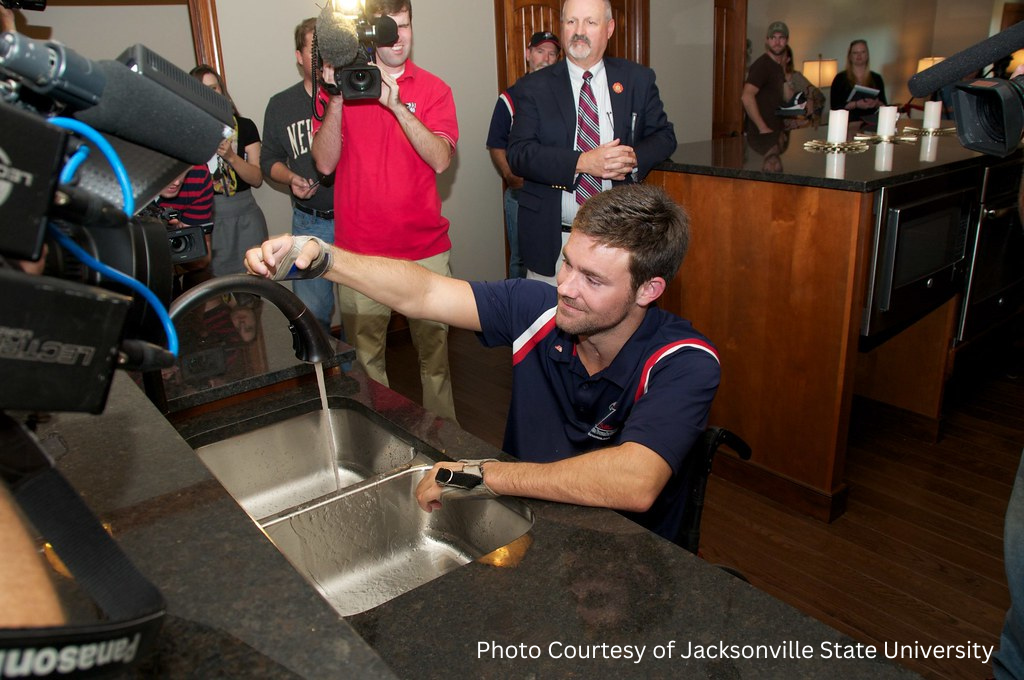
“The daily routine – just like showering and stuff like that – takes a lot of time for me,” he said. “So being able to do all that on my own, without help and to do it in – not as quickly as a normal person, but in a somewhat timely fashion – frees me up to do anything during the day that I need to.”
Ben has certainly made the most of the extra time that his mortgage-free smart home has given him, from earning a finance degree from Jacksonville State University to running his own business. After 12 remarkable years, Ben is a shining example of the Smart Home Program’s ultimate goal: to put an injured veteran or first responder on a path to living in an environment that affords a higher level of independent living.
“Otherwise, I was stuck at home,” Sgt. Ben Tomlinson said. “I don’t even know how to quantify how many things …how many tasks have been freed up for me to do that I wouldn’t be able to do otherwise.”
‘It Gives Me A Purpose’
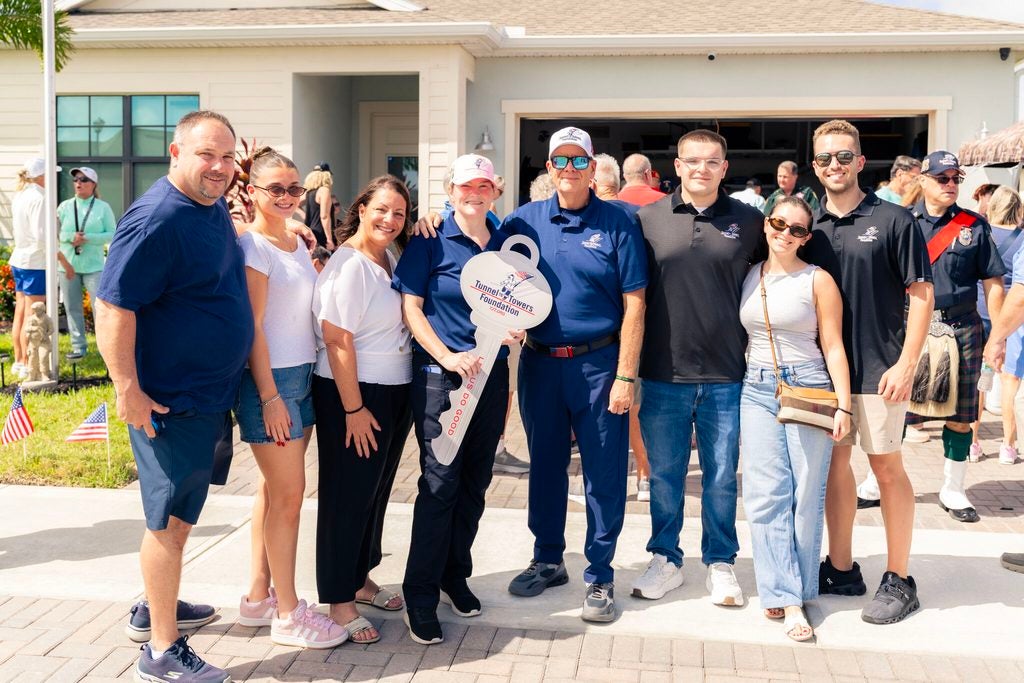
Nine months of renovations to Heather Betz’s Viera, Florida, home were completed in October 2025. As for the massive changes that a mortgage-free smart home would usher into her life, it didn’t take long for Heather to see the light.
“I think for me, the biggest thing that they did was the lights,” said Heather while referencing her sensitivity due to a gunshot wound to the eye and subsequent surgeries. “I can literally walk in the house and say, ‘hey, turn the living room lights on at 60 percent’ and bam, they’re at 60 percent … that was huge for me.”
No longer having the financial burden of a mortgage also had a hugely positive impact on not just Heather, but also her husband.
“[Chuck] was working 40-plus hours a week, you know, trying to make ends meet,” Heather said. “Now he maybe works 16 to 20 hours.”
From spending more time together to easing some of Heather’s pain and light sensitivity, the hard work of so many to renovate their house has shown the Betzes a path out of darkness that suddenly crept into their lives on Thanksgiving night 2018.
“I can’t be a cop anymore, so now I volunteer where I can,” Heather said. “It … gives me a purpose.”
Through a local golf tournament and word of mouth, K9 Deputy Heather Betz tells those around Florida’s Space Coast and beyond about the foundation’s mission to do good.
“Never in a million years would I ever be able to repay what Tunnel to Towers did for me,” she said. “But if I can spread the word and get people to help, then they can help other people.”
‘God Has Used Tunnel to Towers’
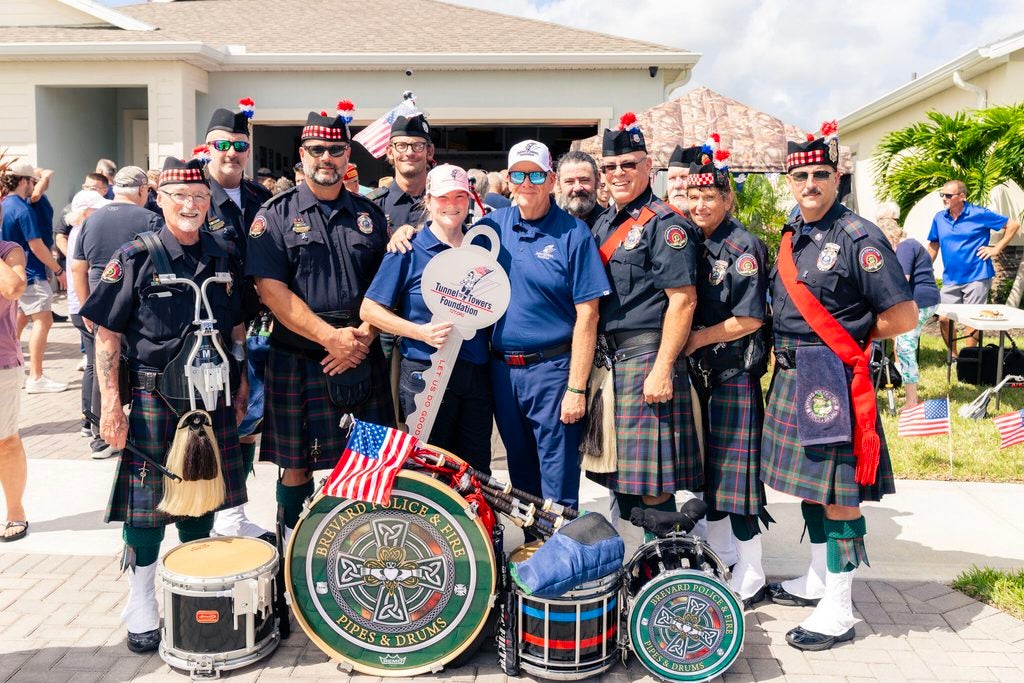
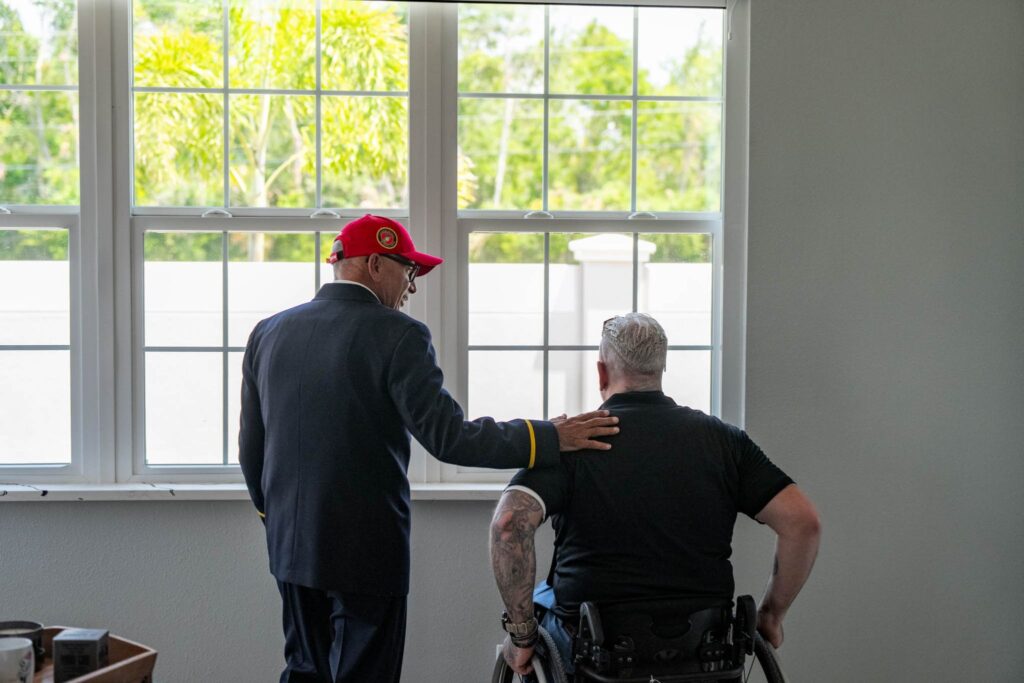
Instead of lying in the grass wishing he was dead, Matthew Hannon now enjoys sitting and talking in circles full of fellow veterans, first responders and Gold Star family members at the Tunnel to Towers Foundation’s inaugural Let Us Do Good Village in Land ‘O Lakes, Florida, where he has lived in a mortgage-free home since April 2025.
“They allow me to live a life in safety,” said Matt, who explained that the Village’s advanced fire safety system could save his life since he’s unable to hear an alarm while sleeping. “I can now go to the house that I’ve been dedicated and live a life not in fear.”
Matthew’s strong faith in God has led him to conclude that ending up among fellow recipients at a Let Us Do Good Village – despite all the surgeries and struggles it took to get there – was no accident.
“Where does He put me? Where does He gift me to be? In a village that has a ton of hurt, right? But also a lot of gratitude,” Matthew said. “They want to heal.”
Instead of focusing on the awful things he saw in war zones and the catastrophic effects of chemicals and burn pits on his own health, Matthew has chosen to not just help his fellow Let Us Do Good residents find that place of healing, but to do so himself
“God has used Tunnel to Towers, no doubt,” Sergeant Matthew Hannon said. “To save lives—to save them.”
An Enduring Commitment
These remarkable stories are three among thousands of heroes that the Tunnel to Towers Foundation has helped. The Smart Home Program has delivered more than 2,000 new beginnings to worthy recipients like Sergeant Ben Tomlinson, K9 Deputy Heather Betz and Sergeant Matthew Hannon. Those smart homes have also impacted of thousands of children, spouses and caregivers.
Countless Tunnel to Towers staffers, volunteers, partners and donors have come together since 2011 to not only change lives, but as Matthew said, “to save them.” As long as there are selfless Americans willing to risk their lives and limbs to keep our country safe, the Tunnel to Towers Foundation and its Smart Home Program will be ready to renovate, modify and build mortgage-free houses for catastrophically wounded heroes.
When K9 Deputy Heather Betz found out that her house would be converted to a smart home and that her mortgage would be paid off, her initial reaction was one of admirable humility.
“I’m not deserving of this,” she said. “There’s other people that lost a lot more—or were killed.”
“No,” said the staff member on the other end of the line. “Tunnel to Towers is for first responders like you.”
Tom Sileo is the Tunnel to Towers Foundation’s Director of Narrative Storytelling. He has authored or co-authored seven military non-fiction books, including I Have Your Back and Three Wise Men.